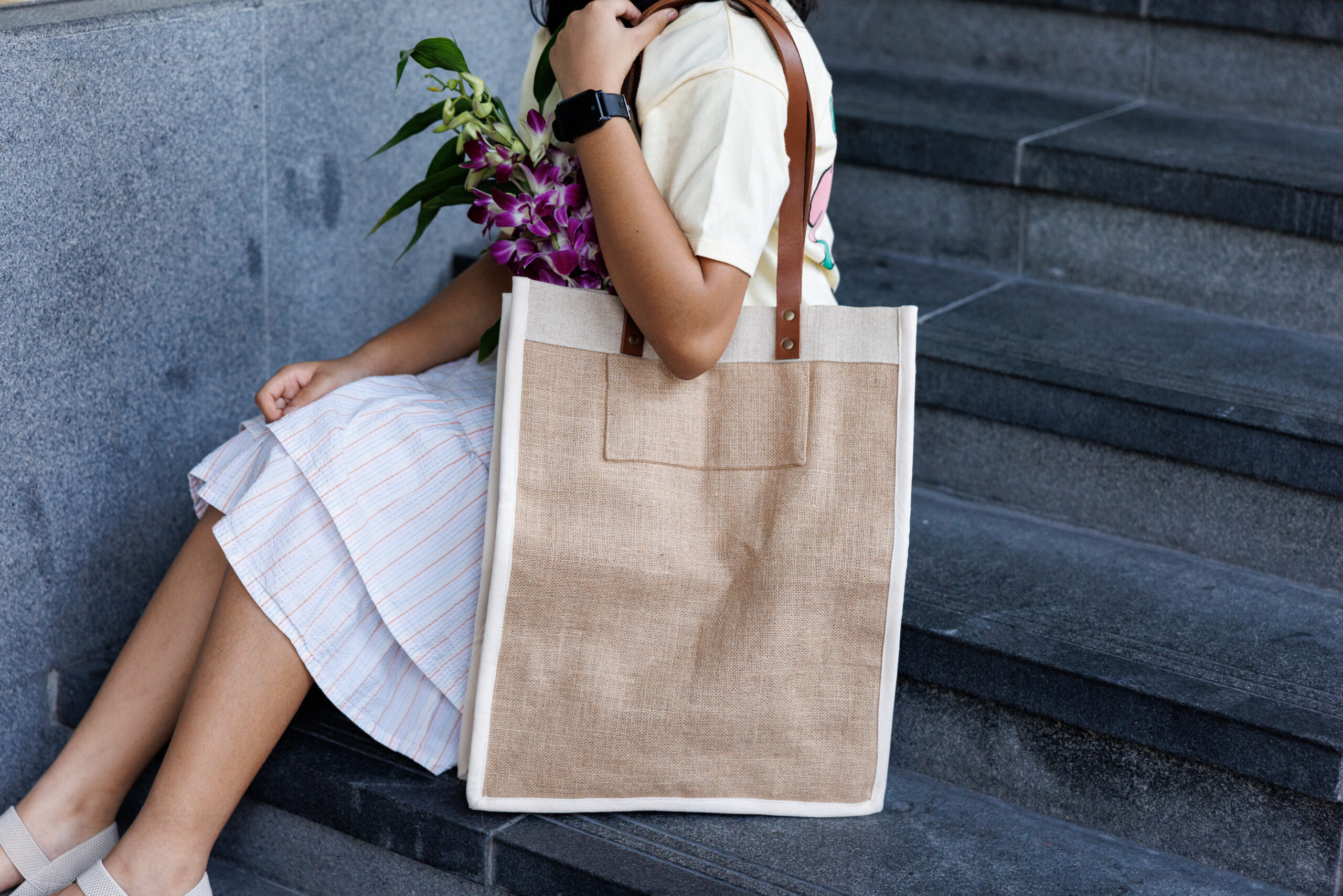
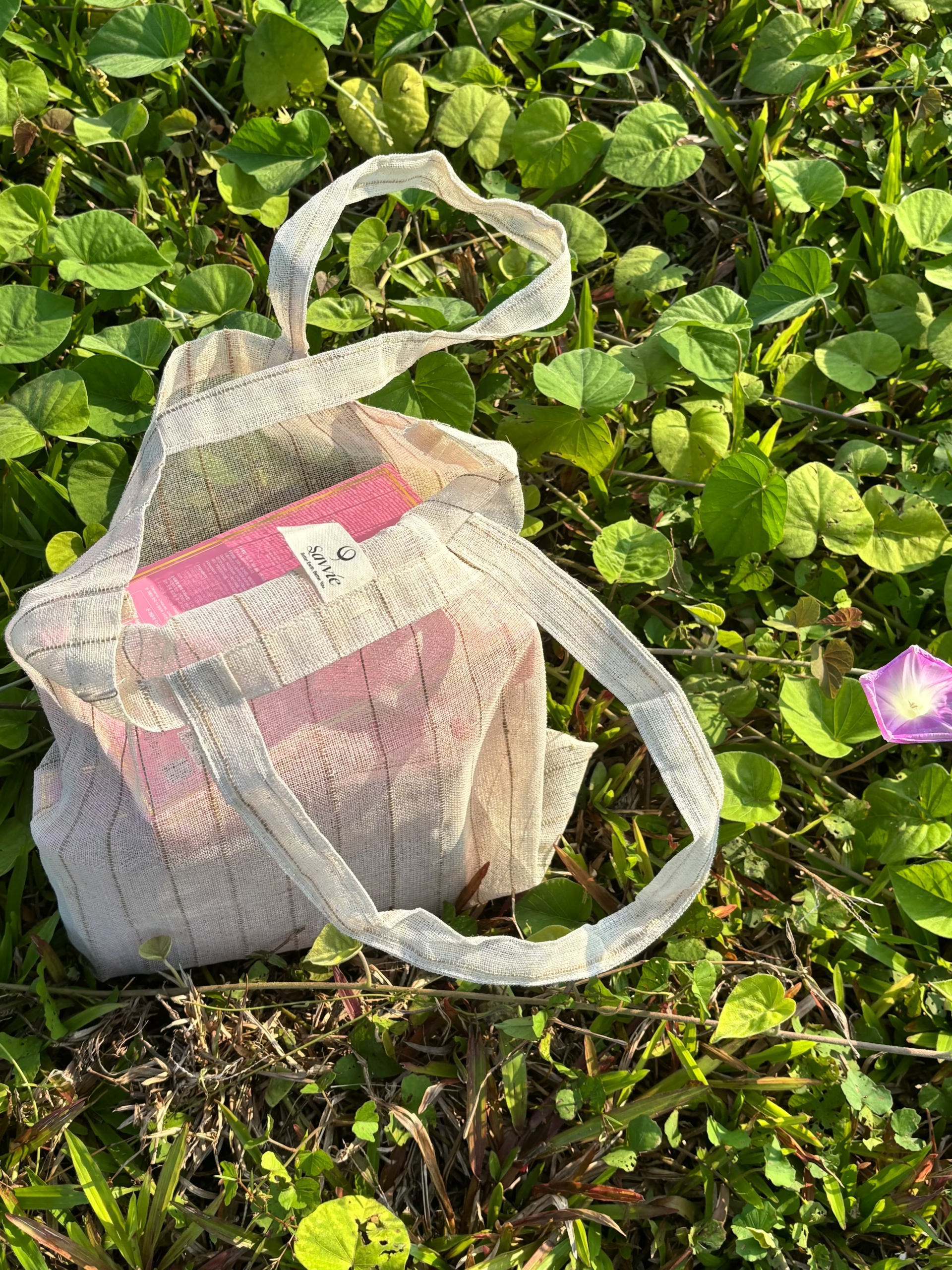
The golden fibre that changed how we think about bags
Origin Story · Savvie Journal
Why Jute?|4 min read|Savvie Editorial
Before plastic existed, jute carried the world’s harvest. We think it’s time it carried yours again.
There is a plant that grows six metres tall in four months, asks almost nothing of the soil, and returns everything to it when its work is done. It has clothed grain sacks, carpeted floors, and wrapped the bales of cotton that built empires. For centuries, entire river-delta civilisations in Bengal built their economies around it. Then plastic arrived, and the world forgot.
At Savvie, we didn’t just choose jute because it’s fashionable or because “eco” is a good word to print on a tote. We chose it because when you look at every quality a material should have — strength, softness, biodegradability, low water use, carbon absorption, social good — jute simply wins. Every time.

What actually is jute?
Jute is a long, soft plant fibre harvested from two species — Corchorus olitorius and Corchorus capsularis — that thrive in the warm, humid floodplains of South and Southeast Asia. The stalks are cut, bundled, and left to rot (soak) in slow-moving water, which loosens the fibres. Those fibres are then hand-stripped, dried in the sun, and spun into yarn. It is one of the oldest and most tactile manufacturing processes on earth — and it has barely changed in a thousand years, because it barely needs to.
The resulting fibre is strong enough to make rope, fine enough to weave into fabric, and flexible enough to be moulded into packaging, flooring, and accessories. It is completely natural, non-synthetic, and contains no petrochemical component whatsoever.

Why jute over canvas, or recycled plastic?
Jute needs rain, not irrigation. Canvas is often a blend — look at the label of most “canvas” bags, and you’ll find synthetic fibres woven in for durability. Recycled plastic is better than virgin plastic, but it is still plastic: it sheds microplastics in the wash, it doesn’t biodegrade, and it keeps us dependent on a material economy we’re trying to leave behind.
Jute composts. It strengthens soil as it breaks down. A jute bag left in the garden at the end of its life becomes nutrients for the next season’s growth. There is a beautiful circularity to that, and circularity is exactly what Savvie is built around.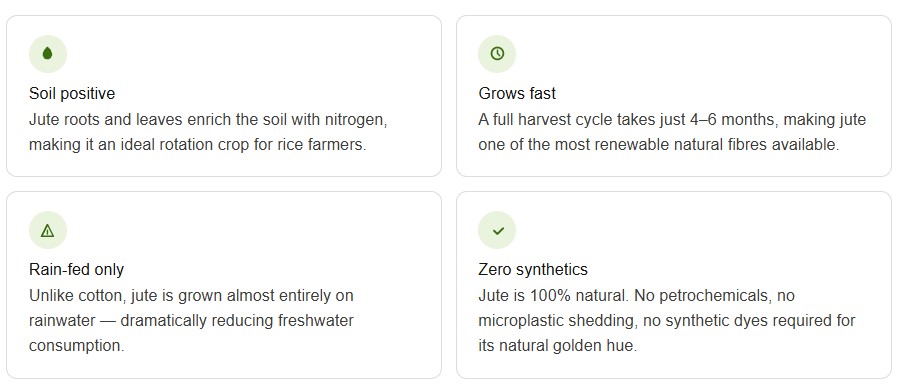
The human side of jute
Jute is also a livelihood. Across Bangladesh, India, and parts of Myanmar, millions of smallholder farmers and handloom workers depend on the jute trade. When you buy a jute product from Savvie, you are not just choosing a material — you are participating in an economy that supports rural women weavers, family farms, and generational craft knowledge that plastic manufacturing simply cannot offer.
This is why Savvie traces every product back to its source. We visit the cooperatives. We know the names of the weavers. Ethical sourcing isn’t a certification we apply for — it’s a relationship we maintain, season by season.
Why we’ll never go back
When we first started building Savvie, we looked at everything — recycled polyester, organic cotton, hemp, bamboo fibre. Each had merits. None had jute’s full picture: the environmental profile, the tactile warmth, the honest texture that gets better with age, the ancient and unbroken craft tradition, and the direct positive impact on farming communities that have been growing this plant for a thousand years.
Jute is not a trend. It is a return. And at Savvie, we think the most radical thing you can do in 2026 is reach back for something the world already knew, and carry it forward.

Learn more here.